


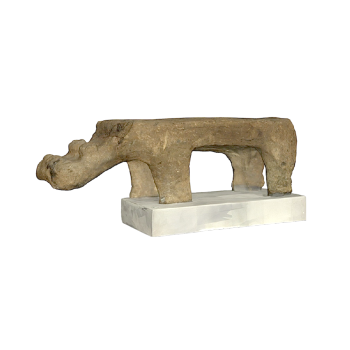
Ancient Egyptian hippo statue
This is an ancient Egyptian hippo statue dating back to the Middle Kingdom period (c. 1961-1878 BC). This statue is the unofficial mascot of the Metropolitan Museum of Art and has a famous nickname "William". It is made of Egyptian glazed pottery (faience), a ceramic material made of quartz powder with a unique blue glaze. The statue was found in a shaft in the burial chamber of a steward named Senbi in the Mayr region of Egypt.

Statue of Bodhisattva in the Northern Song Dynasty
This painted stone statue of Bodhisattva during the Northern Qi Dynasty (550-577) is one of the important collections of the Asian Art Department of the Metropolitan Museum of Art (The Metropolitan Museum of Art) in New York, USA. This statue is famous for its style of "showing bones and clearing images", which perfectly combines the influence of the "Central Plains" of Buddhist art in the Northern Qi Dynasty and the "Matura style of the Gupta Dynasty in India". The Bodhisattva is "upright", with its feet slightly separated, its center of gravity falling on its right foot, its left foot naturally extending forward, and its body slightly lateral, forming a dynamic balance.

Maya Culture Ceramic Wine Cup - Metropolitan Museum of Art
This cylindrical drinking cup, which is a Maya cultural artwork collected by the Metropolitan Museum of Art, is considered a representative work of the Maya pottery painter "Metropolitan Master". It features a mythological scene depicting the young rain god Chahk and a supernatural young leopard. Chahk appears in its typical attire and symbolic accessories, while juvenile jaguars are presented with their supernatural facial features and body details. Not only does it showcase the exquisite craftsmanship of Maya art, but it also reflects the complex myths about life, death, and rebirth in Maya culture. Provided important clues for researchers on Maya religion and ritual practices

Esquifo Ancient Greek Ceramic Containers - Metropolitan Museum of Art
It is an ancient Greek container with a deep bowl, wide mouth, and handles on both sides. A cup used for drinking liquids. Originating from Attica region, it was made around 500 BC. Belonging to the Athenian painters, the scene depicts two male characters engaged in a Greek wrestling competition called "pancr á tio", with the other two watching as spectators or coaches. It is currently collected at the Metropolitan Museum of Art.

L é cito Ancient Greek Ceramic Container - Metropolitan Museum of Art
It is a container used in ancient Greece to store oil, especially olive oil. This type of container typically has a slender body, a handle connecting the neck and body, and a narrow mouth without a pouring port. In ancient Greek culture, it was not only a daily necessity, but also commonly used as burial objects. Now collected in the Metropolitan Museum of Art, it is a red painted pottery belonging to the painter Tithonus, made around 480 BC. The scene depicts Athena holding a spear and helmet, showcasing the exquisite craftsmanship of ancient Greek art.

CopticVessel Ancient Egyptian Coptic pottery - Metropolitan Museum of Art
It is a pottery from the Coptic period in Egypt, belonging to the cultural product of the Byzantine Egyptian period. Produced in the 4th to 7th centuries, specifically in the Kaga Oasis of Egypt. Made of homemade materials, it belongs to the category of ceramic artworks. This artwork is currently housed in the Metropolitan Museum of Art and is part of the medieval art and monastery collections. It showcases the artistic style and ceramic production techniques of the Copts at that time, providing valuable physical evidence for us to understand the culture and lifestyle of this period.

New Ireland Malagan Totem Bird
The Malagan totem from late 19th century New Ireland is decorated with various pigments, including lime, in the form of carved wood. Adopting a wooden board form, the bird is facing forward. Malagan is a collective term in Northern New Ireland, primarily used for ceremonies commemorating the deceased, as well as for masks and carvings associated with them. This Malagan totem is now housed in the Metropolitan Museum of Art.

New Ireland Malagan Totem Rhinoceros Bird
The Malagan totem from late 19th century New Ireland is decorated with various pigments, including lime, in the form of carved wood. The eyes are made of tiger snail shells and are carved wooden hornbill heads colored with various pigments. Malagan is a collective term in Northern New Ireland, primarily used for ceremonies commemorating the deceased, as well as for masks and carvings associated with them. This Malagan totem is now housed in the Metropolitan Museum of Art.
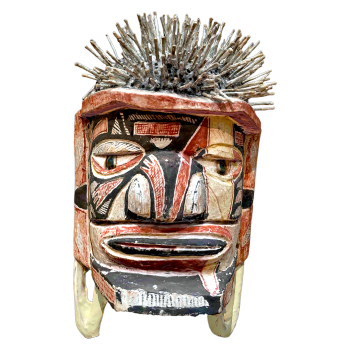
New Ireland Malagan Totem
The Malagan totem from late 19th century New Ireland is decorated with various pigments, including lime, in the form of carved wood. The eyes are made of tiger snail shells, and the hair is made of wooden handles fixed in the head socket. Malagan is a collective term in Northern New Ireland, primarily used for ceremonies commemorating the deceased, as well as for masks and carvings associated with them. This Malagan totem is now housed in the Metropolitan Museum of Art.

Statue of a Young Man in Limestone from the Classical II Period in Cyprus
This youth portrait sculpture was made during the Cyprus Classical II period from 600-475 BC. The statue is made of limestone and was created around 530-520 BC. The hair of the sculpture is divided into large horizontal curls, forming an arched shape at the back. The details are represented by small triangles. The facial features are very delicate, with red marks on the lips. The nose is slightly curved and the eyes are wide open. The eyebrow lines are long and thin, and the ears are depicted very delicately. There is a row of curly hair above the forehead. The statue is currently on display at the Metropolitan Museum of Art in New York, located in Hall 171.

Popular Models

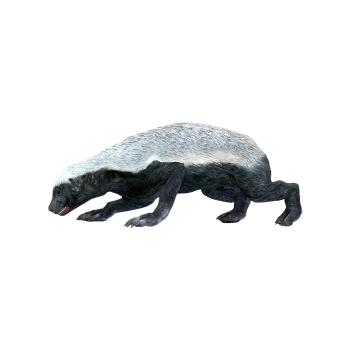
Honey Badger (3D animated model)
192 View
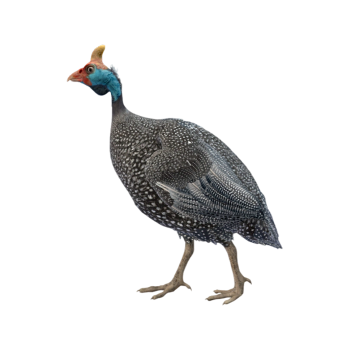
Guinea fowl (3D animated model)
163 View

Wild Goose (3D animated model)
185 View

Red Fox (3D animated model)
153 View
Random Model


Artisan Plus 1.65L Blender
820 View

David Brown 25D Tractor
690 View


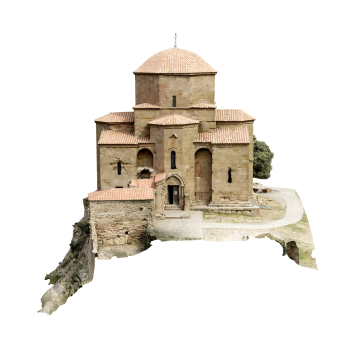
Ancient Monastery in Georgia
1144 View

Living room sofa
486 View


